


An atmosphere of feeling of anticipation. Apparent is the chilled vapour emanating from my competitors as they do the "pre-race" jiggle on the starting line.
A swift flick of the hips.
I'm lined up for my local Saturday morning race and I mean business. The countdown begins...
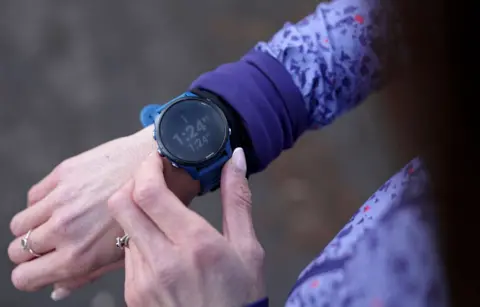
Wait a second. I have to adjust my tracker. The same goes for the guy beside me.
The person waiting sighs. I won't start until… yes! Signal acquired, and I'm running.
In the mele, it's hard to see a person without a smartwatch on it. And this isn't only us athletes who rely on them.
We're witnessing a booming, massive industry. Names like Samsung Galaxy are prevalent, each with an wide array of various versions to fit a spectrum of needs. Based on how advanced the watch you go for, costs can vary between £100 to a significant investment.
"I find it infuriating, I can't relax."
"It provides solace… It feels like a supporter supporting me."
"Stop telling me I've experienced a bad night's sleep."
A small sample of the comments I've received from other device users when I question what they feel about theirs.
The Data Dilemma
My thoughts on my own device? Right now, frustrating. It's telling me I'm off pace, making me wonder whether the trees I'm running below are interfering with my satellite signal.
Millions of us fasten these small devices onto our arms and use them all day and night, apparently comfortable with the fact they're perpetually recording us.
A distant memory are the days when we relied on them only to give us an rough count of our step count. Currently, they can measure our nightly rest, heart rate, oxygen saturation, our body battery.
It's a challenge to find a physical metric they aren't designed to measure.
But are they able to do what they say they do? And are the statistics we analyse a accurate representation of the truth? Do they enhance our overall health, or do the multitude of measurements and motivational messages just increase our daily stresses?

Addiction or Aid?
"I become a bit obsessed with mine," an individual confesses.
While she loves how her device monitors her workouts, she finds some of its other features "daunting" at times - a feeling initially realised during a pregnancy.
Until she found out she could put it into a specific mode, her smartwatch kept telling her she was not being energetic enough. Now, the watch keeps telling her she's had a restless night.
"I have a infant, there's no point to be notified I'm tired," she says. "I know that only too well."
Why doesn't she just stop wearing it?
"I could, theoretically, but I have this love-hate relationship with it," she explains. "I appreciate it for its fitness insights, but I'm unsure whether all the other things it can now do is maybe excessive for me."
Inside the Device
Each model of smartwatch has its own unique way of measuring your health metrics and analysing your data, but the vast bulk use optical sensors on the reverse of the watch.
They commonly project tiny, coloured LED lights onto your arm which can monitor pulsation, detecting your pulse rate. Sophisticated devices analyse changes in the electrical current that flows through the skin to gauge your nervous system activity.
A Fine Balance
One expert says that in general for smartwatches, it's a "fine balance" - while the rapidly advancing tech could actually aid early diagnosis, "spotting abnormalities before we feel unwell", it could also turn us the tracked into the "anxious healthy".
He points out that some of the latest wearables can conduct tests like electrocardiograms (ECGs), which regularly monitor how stable the heart is. They can notify if someone is experiencing a heart arrhythmia, where there is irregular electrical activity in the heart causing an uneven pulse.
This does not necessarily indicate someone is imminently going to suffer a heart attack, but it can give an advance notice they might be more at risk of a heart problem in the long term.
But how to make sense of these numbers is complicated. The expert worries that as further capabilities are introduced, people may find it hard to fully understand their data.
"I have some doubts that the ability to monitor so much data is such a beneficial thing," he says.
A professor studying cardiology echoes this sentiment. Research into the impact of wearable tech on a specific group of heart condition patients suggested a noticeable percentage of those who were given devices to monitor their cardiac function experienced greater stress and were "far more likely to use healthcare resources".
She noted a cycle with her patients - they noticed a concerning reading on their watch. They grew concerned. Their pulse increased. They got increasingly anxious. They re-examined the data, and their anxiety went up again.
"When people are presented with numbers about ourselves that we lack context for then, understandably, we are going to become concerned," the psychologist says. "We check, we re-check - it becomes a self-fulfilling prophecy."


